
Precision craftsmanship
Specialized timepiece expertise
Expert guidance
Made around your vision
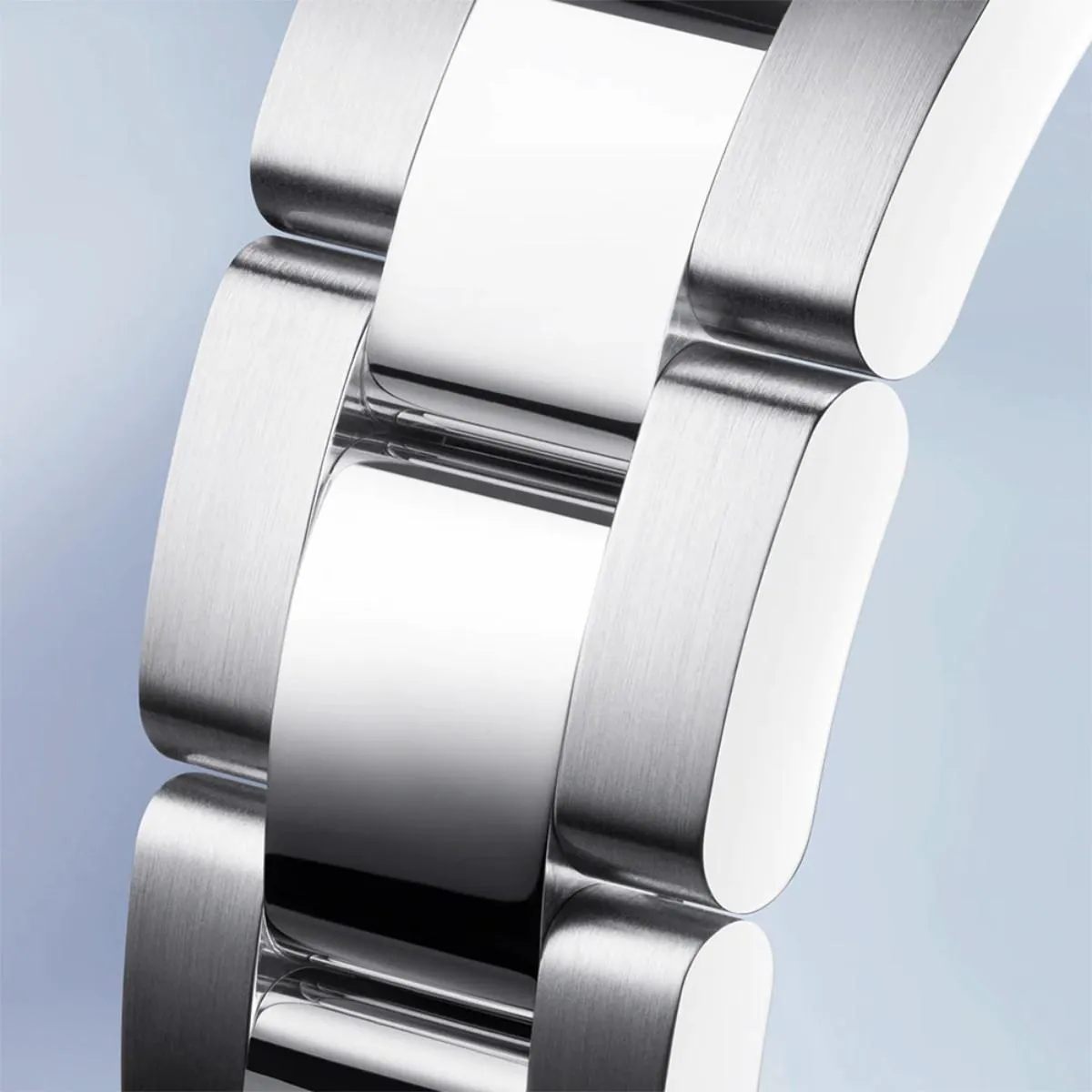
Rolex bracelets represent distinct horological engineering: the rugged 3-piece Rolex Oyster bracelet built for tool-watch resilience; the supple 5-piece Rolex Jubilee bracelet famous for Datejust models; and the iconic semi-circular 3-piece Rolex President bracelet reserved for Day-Date timepieces.
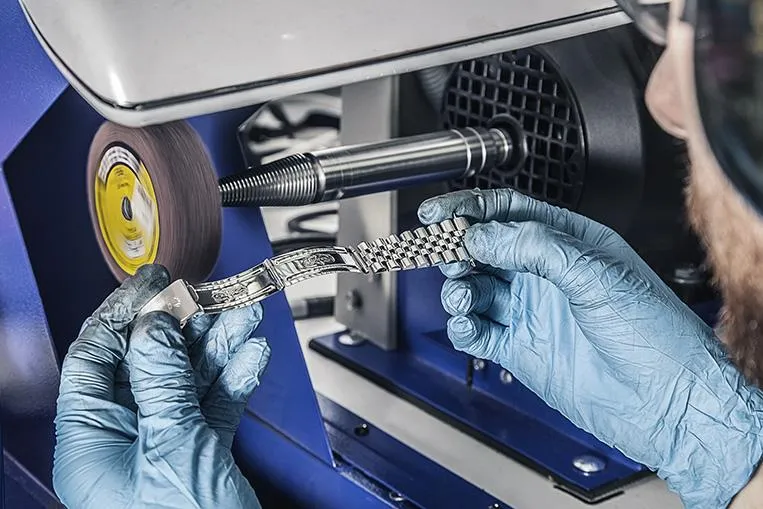
Each bracelet combines contrasting satin-brushed outer links and mirror-buffed center links. Inexperienced polishing rounds crisp link edges and softens factory lines. Our Newport Beach horological workshop uses precision lapping wheels and micro-masking tape to preserve the crisp factory geometry that defines authentic Rolex case and bracelet polishing.
Submariner / GMT / Explorer
20–21mmSubmariner 126610
21mmGMT-Master II 126710
20mmDatejust / GMT-Master II
20mmDay-Date 40
20mmDaytona 126500
20mmVintage Submariner 5513
20mmDatejust 1601
20/42mmDay-Date 18238
20mmGMT-Master II
20mmExplorer 124270
20mmSubmariner 116610
20mm
| Step-by-Step Refinishing Process | When to Refinish Your Bracelet? | Why It Matters |
|---|---|---|
| 1 Disassemble bracelet (remove all dirt and grease in ultrasonic bath). |
Visible scratches, tool marks or dull finish. | Restores original shine and finish. |
| 2 Inspect for stretch, loose pins, or damaged screws (repair if needed). |
After years of wear or heavy use. | Improves comfort and safety. |
| 3 Mask polished center links (for PCI Oyster) using precision tape. |
Before selling or preserving collector value. | Maintains factory-correct look. |
| 4 Hand-brush all brushed surfaces with German abrasive wheels (does not remove edges). |
You want to preserve the bracelet’s original design. | Keeps crisp edges and definition. |
| 5 Re-polish the case and safety latch to factory finish (horizontal grain on Oyster, vertical on Jubilee). |
When the finish looks uneven or scratched. | Restores uniform finish and durability. |
| 6 Final ultrasonic cleaning, reassembly, and lubrication of clasp springs. |
After polishing or as part of full service. | Ensures smooth operation and longevity. |
 Posted on Google
 Yasmeen Kadouh
Trustindex verifies that the original source of the review is Google.
Jacob is kind, thorough, and so knowledgeable!! I will definitely come back for my jewelry needs.Posted on Google Model3 GirlI had such a wonderful experience at Newport Jewelers, and I especially want to recognize Jacob for his exceptional customer service! I absolutely did not want to be without my ring, but it needed to be resized. Jacob got me in right away and went above and beyond to make sure I wasn’t without it for long. He had my ring resized in record time, and I couldn’t have been happier with the service and care he provided. What really stood out to me was how accommodating, professional, and kind Jacob was. Customer service like that is hard to find these days! I had actually called another jeweler in the same plaza beforehand, and the person I spoke with was extremely rude and unhelpful. The difference in customer service was honestly night and day. I highly recommend Newport Jewelers and Jacob. If you want someone who genuinely cares about their customers and takes pride in their work, definitely see Jacob! ⭐️⭐️⭐️⭐️⭐️Posted on Google
 Stephen GeorgeI brought my Rolex in after I cracked the crystal and Jacob took care of it for me. He was very helpful and did a great job with the repair. My watch looks like new again!Posted on Google
 Kyryl AbazherMy wife is really happy with how the ring 💍 sizing change turned out. Jacob is very knowledgeable and detail oriented - true professional with high standards!Posted on Google
 allegra malekiJacob did amazing work on my engagement ring that was passed down to me from my grandmother. He resized the ring and made it silver. It is my dream ring and he made my dreams come true. I can’t appreciate him enough, he is amazing. I will reccomend him to everyone I know !Posted on Google
 Sara WilliamsReally happy with my experience at Newport Jewelers. I went in looking for an engagement ring and honestly wasn’t sure exactly what I wanted at first. Jacob was really helpful and took the time to show me different options and answer all my questions. I ended up finding a ring that I absolutely loved. The whole experience was great, and I really appreciate Jacob’s help. Definitely recommend Newport Jewelers if you’re looking for an engagement ring.Posted on Google
 Kyle GreenJacob was great! I walked in and he was able to fit my Rolex within 10 minutes. Great service!Posted on Google
 Kyle VillasenorI had a wonderful experience meeting and doing business with Jacob. He was incredibly friendly, welcoming, and a pleasure to work with. I needed a ring resized, and the results were even better than I expected, especially considering how significant the size change was. The craftsmanship was excellent, and the ring came back looking brand new. I was also really impressed to learn that Jacob makes his own jewelry, which shows in the quality and attention to detail of his work. You can tell he takes a lot of pride in what he does. I’m extremely happy with how my ring turned out and would highly recommend Jacob to anyone looking for beautiful craftsmanship, quality work, and great service.Posted on Google
 Katherine GordonI had two rings worked on by Newport Jewelers the first was a repair, stone replacement and smoothing down sharp edges making my ring more comfortable to wear. The ring is stunning, he cleaned and polished it Next I had him change the mounting of my gorgeous 12 carat vivid blue sapphire from a very old platinum ballerina styled ring. To a modern pave mounting. The ring is stunning when I saw it I got goose bumps and wanted to cry. I have never seen a more beautiful ring, and the best part is it is mine!!! Thank you so much I am so so very happyPosted on Google
 Suzan JamesI had such a wonderful experience at Newport Jewelers! I recently bought a beautiful ring from them, and I couldn’t be happier with my purchase. Jacob was incredibly kind, patient, and helpful throughout the whole experience. He made me feel comfortable and never rushed me into making a decision. You can really tell that he cares about his customers and wants them to find something they truly love. Highly recommend Newport Jewelers, especially if you’re looking an Engagement rings!
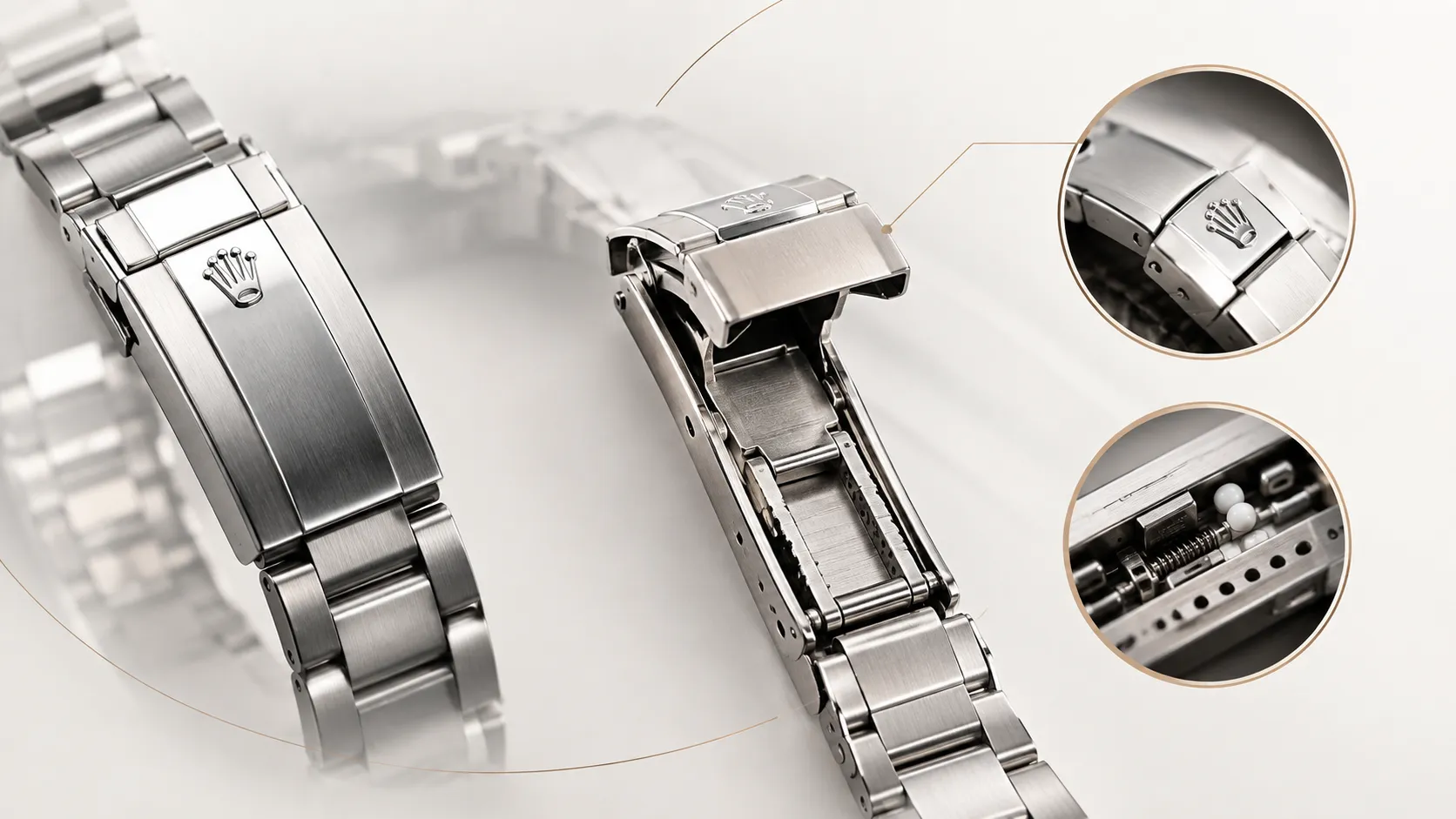
Because the clasp rests directly against desks and surfaces, it is usually the first part of a Rolex to show visible scuffing. Our specialized Rolex clasp polishing in Newport Beach safely eliminates surface abrasion without flattening the raised Rolex coronet emblem. We disassemble each flip-lock cover and blade prior to buffing, protecting sensitive pivot pins and internal spring tension while restoring authentic linear satin brushing across the face.
Newport Jewelers provides factory-grade Rolex bracelet polishing and refinishing in Newport Beach, servicing clients across Newport Coast, Costa Mesa, Irvine, Corona del Mar, and greater Orange County with on-site horological bench care.
Improper buffing harms value, but our technicians use micro-abrasive wheels and light finishing compound to remove surface scuffs while keeping original factory chamfers, bevels, and link weight intact.
Yes. We restore both 18K yellow gold, Everose gold, and 904L Oystersteel links, carefully masking contrasting brushed and mirror-polished sections to preserve clear demarcation lines.
Yes. We take apart clasp components to prevent polishing compound from contaminating sliding rails, tension springs, or ceramic detent balls
Newport Beach, California
(949) 781-1979
Private appointments available