
Precision craftsmanship
Specialized timepiece expertise
Expert guidance
Made around your vision
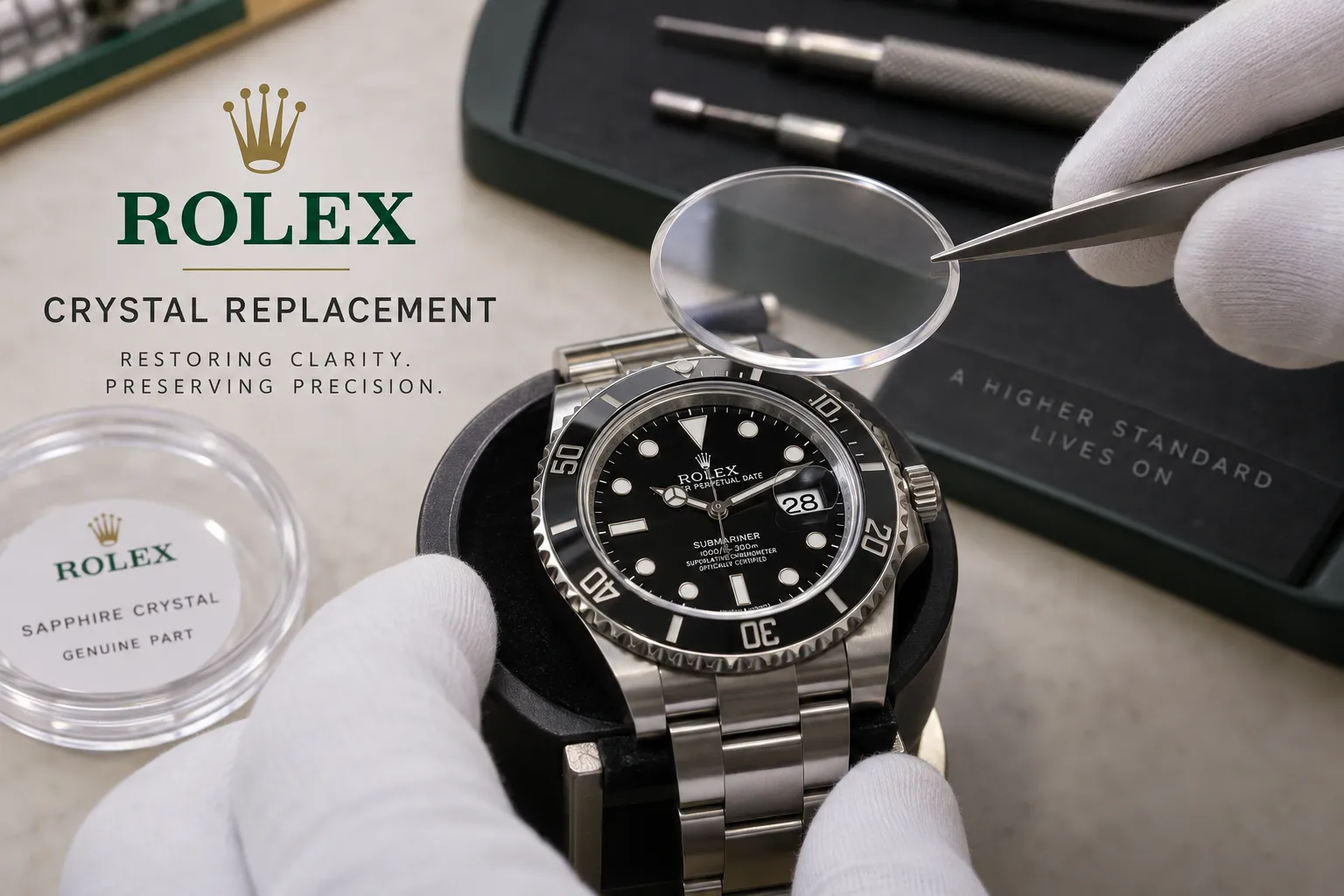
A chipped rim, hairline fracture, or shattered crystal compromises more than just the appearance of your watch—it puts the entire dial, hands, and mechanical caliber at risk. Microscopic glass dust from a cracked crystal can migrate into the gear train, causing friction damage, while fractured edges break the airtight seal that keeps moisture out.
Our Newport Beach watchmakers replace scratched or cracked glass using factory-specification scratch-resistant sapphire crystals. We carefully uncase the movement to inspect the dial, install fresh Hytrel I-gaskets, and align the iconic Cyclops lens for crisp 2.5x date magnification before performing wet and dry pressure testing.
(126610LN)
41mm(124060)
41mm(126710BLRO "Pepsi")
40mm(126710BLNR "Batman")
40mm(126500LN)
40mm(126518LN, gold)
40mm(126334)
41mm(126234)
36mm(278274)
31mm(228238)
40mm(128238)
36mm(124270)
36mm(226570)
42mm(126600)
43mm(136660)
44mm(126655)
40mm(226659)
42mm(336934)
42mm(124300)
41mm(126000)
36mm
| Step-by-Step Service | Signs You Need It | Why It Matters |
|---|---|---|
| 1Complete disassembly, cleaning, and inspection of the movement (Calibre 3235, 4131, etc.). | Watch hasn’t been serviced in 5–7 years. | Ensures every component is checked, not just the surface. |
| 2Replacement of worn components (mainspring, automatic module, pallet fork). | Rotor makes grinding noise or watch stops intermittently. | Prevents further wear to the movement. |
| 3Fresh lubrication with Rolex-specified Moebius oils. | Gritty feeling when winding or setting the time. | Restores smooth, accurate running. |
| 4Regulation to Superlative Chronometer standard (±2 sec/day). | Timekeeping is erratic or noticeably off. | Brings the watch back to factory accuracy. |
| 5Case and bracelet refinishing – brushed Oyster surfaces and polished chamfers. | Visible scratches or a dull finish. | Restores factory-correct geometry and shine. |
| 6Water resistance testing (up to 300m) and full gasket replacement. | Any case opening or seal age of 2+ years. | Confirms the watch is safe to wear day to day. |
 Posted on Google
 Yasmeen Kadouh
Trustindex verifies that the original source of the review is Google.
Jacob is kind, thorough, and so knowledgeable!! I will definitely come back for my jewelry needs.Posted on Google Model3 GirlI had such a wonderful experience at Newport Jewelers, and I especially want to recognize Jacob for his exceptional customer service! I absolutely did not want to be without my ring, but it needed to be resized. Jacob got me in right away and went above and beyond to make sure I wasn’t without it for long. He had my ring resized in record time, and I couldn’t have been happier with the service and care he provided. What really stood out to me was how accommodating, professional, and kind Jacob was. Customer service like that is hard to find these days! I had actually called another jeweler in the same plaza beforehand, and the person I spoke with was extremely rude and unhelpful. The difference in customer service was honestly night and day. I highly recommend Newport Jewelers and Jacob. If you want someone who genuinely cares about their customers and takes pride in their work, definitely see Jacob! ⭐️⭐️⭐️⭐️⭐️Posted on Google
 Stephen GeorgeI brought my Rolex in after I cracked the crystal and Jacob took care of it for me. He was very helpful and did a great job with the repair. My watch looks like new again!Posted on Google
 Kyryl AbazherMy wife is really happy with how the ring 💍 sizing change turned out. Jacob is very knowledgeable and detail oriented - true professional with high standards!Posted on Google
 allegra malekiJacob did amazing work on my engagement ring that was passed down to me from my grandmother. He resized the ring and made it silver. It is my dream ring and he made my dreams come true. I can’t appreciate him enough, he is amazing. I will reccomend him to everyone I know !Posted on Google
 Sara WilliamsReally happy with my experience at Newport Jewelers. I went in looking for an engagement ring and honestly wasn’t sure exactly what I wanted at first. Jacob was really helpful and took the time to show me different options and answer all my questions. I ended up finding a ring that I absolutely loved. The whole experience was great, and I really appreciate Jacob’s help. Definitely recommend Newport Jewelers if you’re looking for an engagement ring.Posted on Google
 Kyle GreenJacob was great! I walked in and he was able to fit my Rolex within 10 minutes. Great service!Posted on Google
 Kyle VillasenorI had a wonderful experience meeting and doing business with Jacob. He was incredibly friendly, welcoming, and a pleasure to work with. I needed a ring resized, and the results were even better than I expected, especially considering how significant the size change was. The craftsmanship was excellent, and the ring came back looking brand new. I was also really impressed to learn that Jacob makes his own jewelry, which shows in the quality and attention to detail of his work. You can tell he takes a lot of pride in what he does. I’m extremely happy with how my ring turned out and would highly recommend Jacob to anyone looking for beautiful craftsmanship, quality work, and great service.Posted on Google
 Katherine GordonI had two rings worked on by Newport Jewelers the first was a repair, stone replacement and smoothing down sharp edges making my ring more comfortable to wear. The ring is stunning, he cleaned and polished it Next I had him change the mounting of my gorgeous 12 carat vivid blue sapphire from a very old platinum ballerina styled ring. To a modern pave mounting. The ring is stunning when I saw it I got goose bumps and wanted to cry. I have never seen a more beautiful ring, and the best part is it is mine!!! Thank you so much I am so so very happyPosted on Google
 Suzan JamesI had such a wonderful experience at Newport Jewelers! I recently bought a beautiful ring from them, and I couldn’t be happier with my purchase. Jacob was incredibly kind, patient, and helpful throughout the whole experience. He made me feel comfortable and never rushed me into making a decision. You can really tell that he cares about his customers and wants them to find something they truly love. Highly recommend Newport Jewelers, especially if you’re looking an Engagement rings!
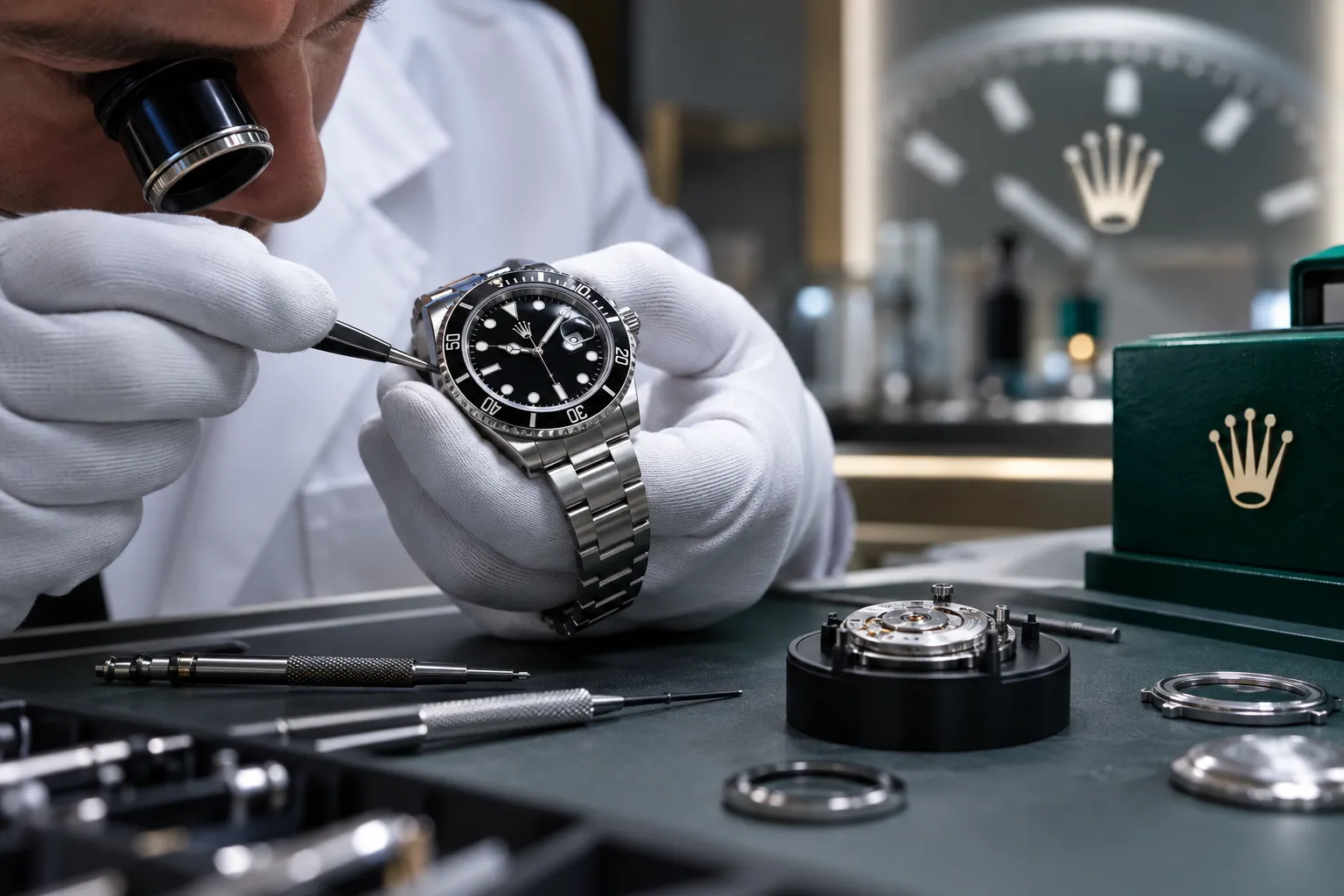
Did your watch face hit a hard surface or show an edge chip? Stop by our Newport Beach showroom right away for an on-the-spot crystal evaluation and upfront quote from our master technicians.
Newport Jewelers provides on-site Rolex crystal replacement inside our Newport Beach showroom, serving watch collectors across Newport Coast, Irvine, Corona del Mar, and Orange County.
Pull the winding crown out completely to stop the movement (hacking), keep the watch face down, and avoid shaking it. Bring it into our Newport Beach workshop immediately so our watchmakers can extract the movement before glass dust harms the gears.
Yes. We source and install authentic high-dome acrylic crystals for vintage Submariner, GMT-Master, and Datejust references, preserving period-correct aesthetics.
Yes. We install fresh factory gaskets and perform wet and dry pressure testing up to factory depth ratings to guarantee complete protection against moisture and dust.
Newport Beach, California
(949) 781-1979
Private appointments available